
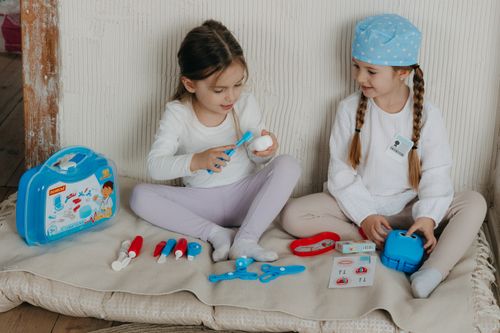
You do not need a special toy or a “right” way to play to connect with your child through play. Sometimes it is enough to sit beside them, join in with a toy they enjoy, or take a short turn in a game. Every child experiences play and communication differently.
Start with your child's interests
Notice what your child is interested in. For example, if they enjoy pushing cars back and forth, you could sit beside them and push a car too. If they are stacking blocks, you could offer them a block or add one to the row they have made. These are not teaching steps or developmental milestones; they are examples of inviting your child to play together.
Playing together does not always mean facing each other or talking. Being alongside one another, briefly joining the same activity, or waiting for the child to show you something can also be a way of sharing an experience.
Give them time to respond
When you start a game, wait for your child to respond. They may respond through speech, movement, gaze, pointing, or another form of communication. If they do not respond right away, it does not mean that they do not understand or do not want to play; they may need a little more time.
If your child moves away, seems unsettled, or wants a break, stop the game. Do not force eye contact, talking, touch, or the use of a particular toy.
Consider the environment too
Crowds, noise, bright lights, smells, or unexpected changes can affect some children’s experience of play. The same setting may not be a problem for another child. Notice the conditions in which your child seems more comfortable; do not assume that one environment will suit everyone.
When should you seek support?
If your child shows significant distress during play, you have concerns about their safety, or the situation is becoming difficult for your family, speak with a health, education, or developmental professional who knows your child. This guide does not assess a child’s behaviour or provide an individualised developmental plan.
Sources
Author: Ufuk Çelik, researcher · Last updated: October 5, 2026. This content is for general information only.